

.png)
-(53).png)
-(52).png)
-(50).png)
-(54).png)
Resurrecting the Ecology of Care
This is something that shocked me when I saw it so clearly...
-(32).png)
We have been delivering raw milk to hundreds of families in Oregon for more than a decade. We have never had an issue or complaint about anyone getting sick from our milk. How is this possible? Government messaging would lead you to believe it’s not possible. Just do a simple search for “raw milk” on CDC.gov. Clearly, the CDC says raw milk makes people sick.
Yikes
Oh my. But….Wait a minute. I have some questions.
1. How then, have we, a farm delivering raw milk to hundreds of families since 2012, been able to avoid any problems? Zero problems.
2. How have people all over the world been drinking raw milk from various mammals for centuries without suffering those devastating effects described by the CDC? Billions of people.
Once you do your research, with eyes wide open, once you visit our farm, touch a cow, maybe milk a cow and taste the warm milk right out of the udder, you find that this is a clear case of truth versus deception; reality versus propaganda.
Authority versus Repeatability
Let’s say you have been diagnosed with “colitis” and one of your friends tells you that drinking raw milk was a remedy for his colitis. If you trust the CDC’s reality that raw milk is unsafe, then you’re not likely to try raw milk to resolve your gut issues, and your enjoyment of food may then be limited for the rest of your life due to chronic colitis. You trust the CDC and the system they oversee as your authority without question. If you trust your friend and try raw milk for a few months and it helps your colitis, then you have chosen, and proven, a different reality than the CDC-promoted reality. You invalidated the CDC’s reality by running your own experiment on your own body repeating what your friend told you would happen. Experiments that yield repeatable results lead you to truth.
When debating truth versus deception, one of the fallacies is called “appeal to authority.” If the CDC is our “authority,” and we blindly accept what they say to be true without question, we are falling into the “appeal to authority” trap. The risk in blindly deferring to authority is that you accept a false reality, and that can limit your life experience. Trust the CDC, lower your enjoyment of foods for life. Trust your friend, restore your enjoyment of the foods you love.
So what’s safe milk?
If we defer to the FDA as the authority for determining what safe milk is, then we test the milk for bacteria content. Here’s a test plate of our milk showing the number of “colony forming units” or CFU's of “aerobic bacteria” in a milliliter of our milk:
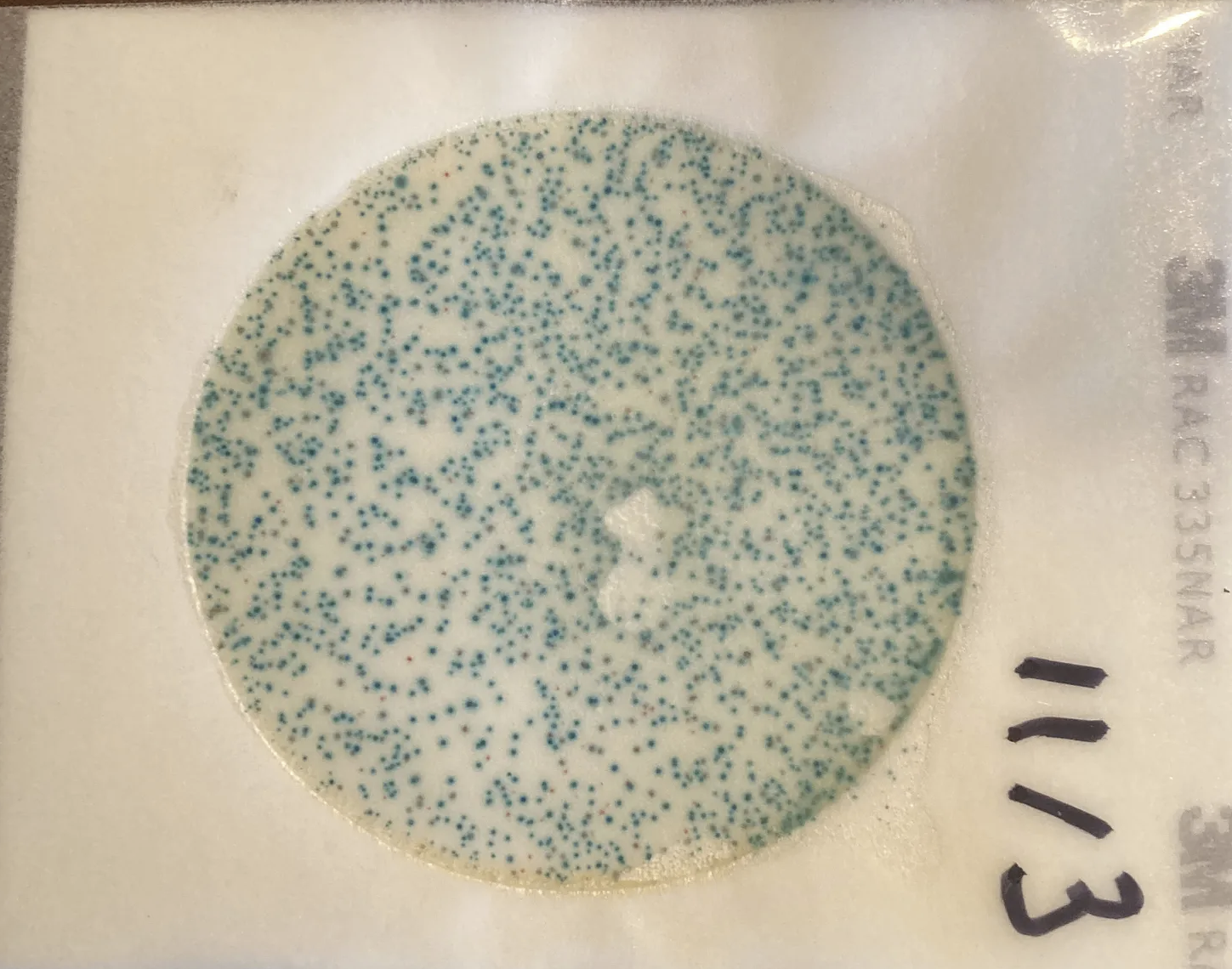
Figure 1: Milk Test showing number of "colony farming units." Theo Farmer. 2024
Seems like a lot, right? But is it? And what is considered safe? The FDA standard is, after pasteurization, the plate above could have 20,000 CFU's, 20,000 dots, and the milk would be safe. After pasteurization... Hmmm. Let’s repeat that. AFTER PASTEURIZATION. It makes me think “Do I really want to drink a fluid that has 20,000 CFU's AFTER PASTEURIZATION?” What are those creatures that survived pasteurization?
The milk test above is our raw milk combined from all of the cows that we milked on the morning of November 3, 2024. You can count the bacteria CFU's on the plate, and you’ll find several hundred, maybe 1000 or even 2000 on the slide. I didn’t count it, just formed an estimate based on years of looking at those plates. If it was 20,000, the plate would appear blacked out with dots.
So, in spite of all the warnings about raw milk being dangerous, the FDA standard says that our raw milk is safe milk. And it’s raw milk.
What really makes safe raw milk?
After a decade of delivering safe raw milk, our view of the factors that make for safe raw milk have changed. The CFU plate count test is actually a bit silly. The fact is that most raw milk from small raw dairy producers is invariably great for you in all respects. A raw milk could even fail the FDA’s CFU-count standard for “safe milk” and still be safe and, more importantly, beneficial and nutritious. Along with “what’s your counts”, here’s a better list of questions to ponder when looking for a raw milk farmer.
1. Is your farmer committed to producing raw milk for human consumption? Raw milk produced for pasteurization should not be intercepted and consumed, and the CDC stats on “raw milk illness cases” do not distinguish between people who drank raw milk that was produced for human consumption and people who drank raw milk produced for pasteurization.
2. What chemicals are used on the farm that might disrupt the microbial balance of the farm or of the cows?
3. What vaccines and pharmaceuticals are used on the farm and with the cows. What agricultural chemicals are used on the pastures? Have those chemicals been tested for safety to the microbial balance on the farm? (Hint: the answer is no.)
4. How aware is your raw milk farmer of the importance of balance in their entire farm microbiome?
5. What do they feed their cows? Cows are designed to eat grass, hay, and leafy forage. Are they feeding grain to the cows? Do they ferment the grain first?
6. How aware is your raw milk farmer of the microbial changes that can occur in a cow fed grain?
7. Does the farmer bottle the milk warm and then cool it or cool it first and then bottle it?
Understanding milk
You are a mammal. That is the truth shocking as it may be. Human females can produce milk to nourish their babies. It comes out of their breasts after they have a baby. That makes us mammals by definition. As a mammal, your birthright food is raw milk. Ideally, you spent at least the first six months of your life drinking only raw milk, hopefully longer, because raw milk was critical to complete you as a human after you were born. That’s right. Raw milk from your mother, from other mothers, and/or from other mammals was critical to complete you after you were born. Not just “grow you.” But complete you.
Complete you? Yes. All of us mammals have a self-completion period that takes place after we are born. For humans, the self completion period is 1000 days. This is a time when we sample the microbial life around us (babies put everything in their mouths) while the raw milk we are drinking sorts and implants, in our guts and bodies, a teeming set of microbes that will be our partners influencing our physical and mental health for the rest of our lives. Understanding milk and its relationship to the microbiome of the human body, and the microbiome of the environment, takes a lot of research and commitment. The human microbiome project revealed, in 2016, that there’s a lot more to our biology than previously thought. Our bodies are a symbiosis of microbial genetics and microbial life. Milk, by design, helps complete our bodies and optimize our health for life. Weird, right?
Risks versus Benefits
The FDA and the CDC aren’t really about “safety.” Because “safety” is always a risk/benefit analysis. If you look at their articles about raw milk, there is no mention of the benefits of drinking our birthright food or they amplify the risks without evidence. Probiotics mentioned? No. Prebiotics? No. Nourishment for our microbial partners? Not a mention.
It’s strange that they don’t list the benefits of our birthright food, the food that completes us, and then weigh those benefits against the risks in an honest way. Strange, don’t you think?
Properties of Milk
Do you know that warm milk straight from a cow is “antimicrobial?” If you don’t know this, you can learn about it by going to any friendly AI bot and typing in something like “raw milk antimicrobial activity.” I use Brave as a browser, and it comes back with:
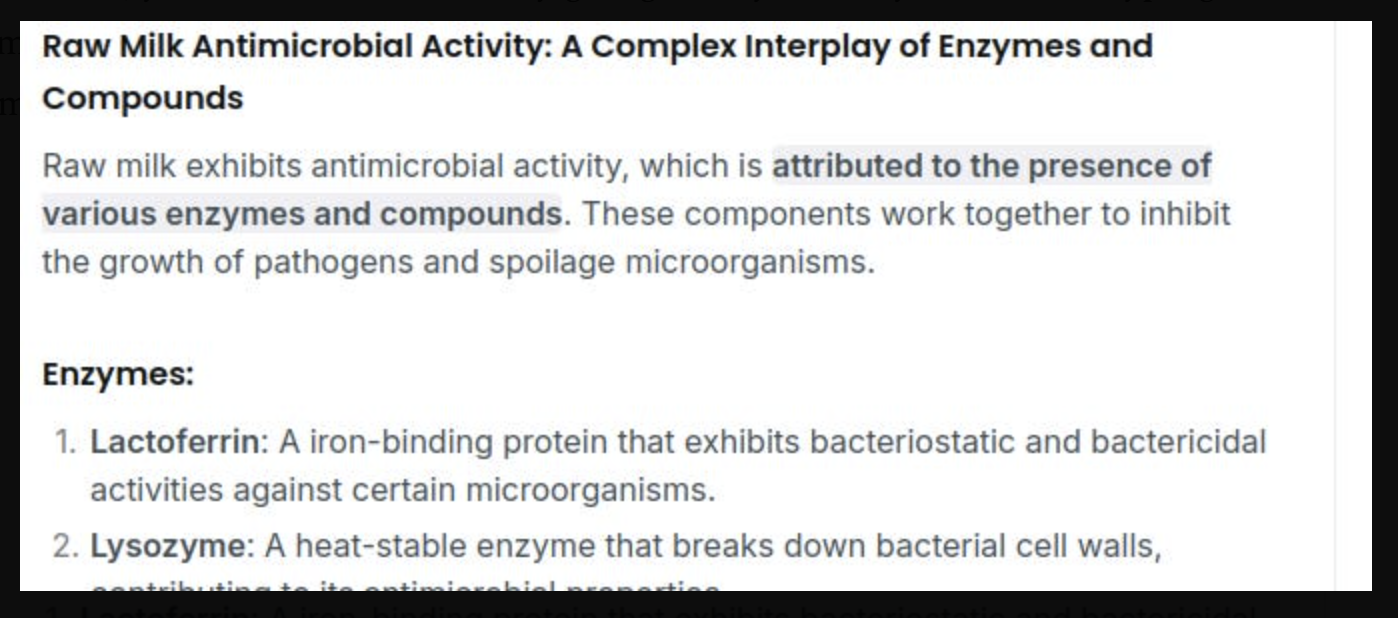
Figure 2: Search results for "raw milk antimicrobial activity" using Brave.com/search.
…and so on.
Do you know that raw milk is probiotic and prebiotic? Again, you can learn about it with a simple query in your browser:
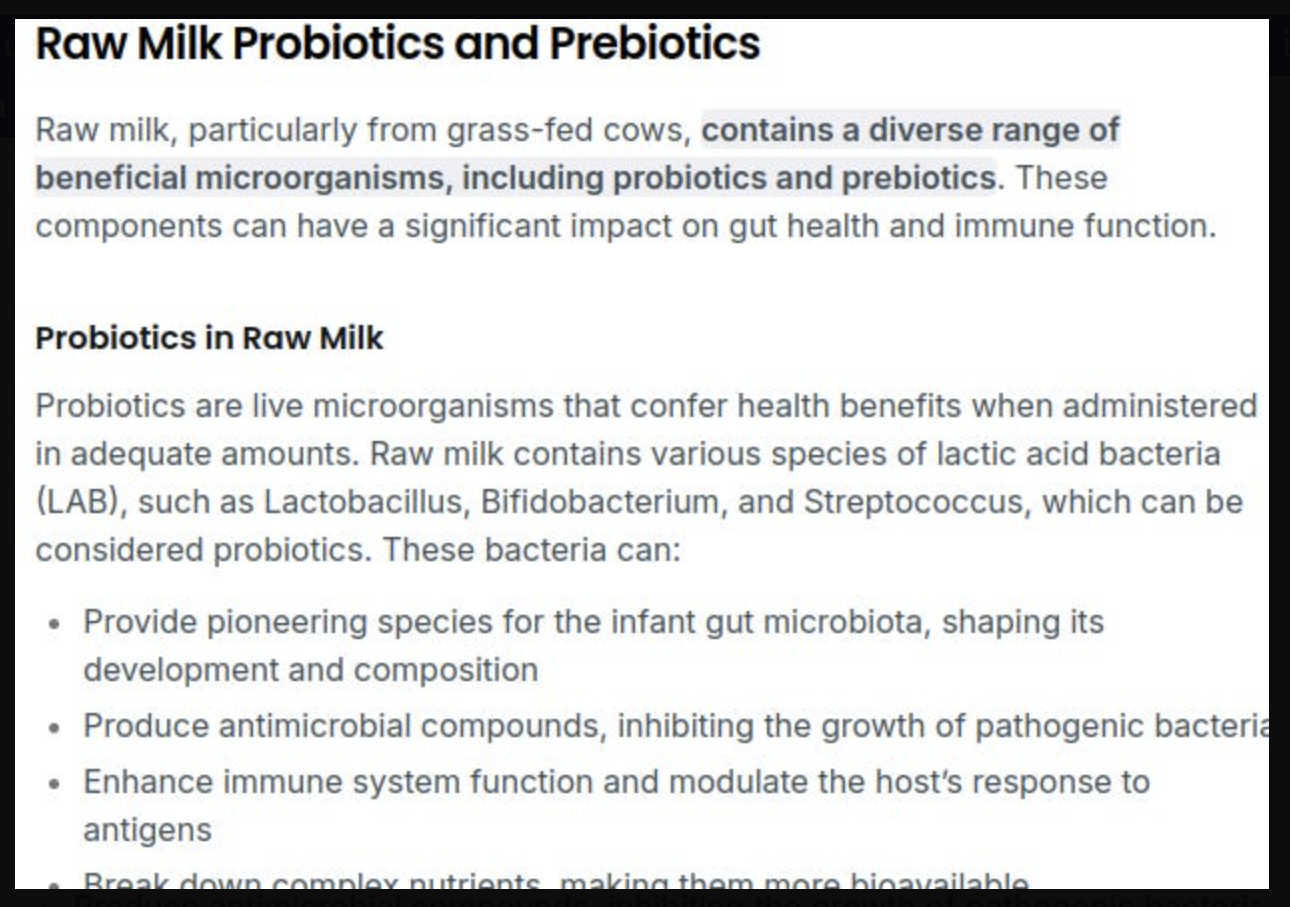
Figure 3: Search results for "probiotics in raw milk" using Brave.com/search
…and so on. It goes on to say how pasteurization destroys much of the benefits derived from the probiotic and prebiotics in the raw milk.
Now, take another look at the CFU's on our standard plate count test:
Figure 1: Milk Test showing number of "colony farming units." Theo Farmer. 2024
Milk is probiotic and prebiotic, eh? What you’re seeing growing on the plate above, then, are colonies of microbes. So maybe you are seeing probiotics? Are those beneficial? Are those risky?
Great Grandpa’s Milk
Now let’s talk family cow. Great Grandpa used to get up in the morning to milk the family cow. He’d grab the bucket he rinsed out the previous night, pull up a stool, maybe wash his hands, or wash the cow teats and his hands at the same time, dry them, milk them. It took 20 or 30 minutes in the barn to milk the cow. Sometimes she would kick the bucket over if she was sensitive. Sometimes she would kick some barn floor into the milk, or she would poo or pee while getting milked and maybe a droplet or more made it into the milk bucket.
Then Great Grandpa would go to the house, run the milk through a cheesecloth or filter, or maybe no filter, then put it in the fridge. Then his kids would drink it, or Great Grandma would make butter or cheese for her babes.
The children had fresh milk with all its benefits and all of its risks. Sometimes, if Great Grandma couldn’t nurse her latest child for some reason, maybe it was her 14th child, then the baby was raised on milk from the family cow. That worked.
Contamination
The milk coming out of a cow that looks and tastes good is invariably healthy milk, and it is generally almost sterile right out of the udder. If I test one cow’s milk in our lab, running the standard plate count, it usually has very very low bacteria/probiotic counts. The primary thing that affects the counts is contamination after the milk comes out. If the farm microbiome is tuned to a balance that is favorable to mammals, then the few microbes we see are likely beneficial.
If you inoculate raw milk with salmonella bacteria when it’s warm and then test for salmonella the next day, you won’t find any salmonella. Remember, milk is antimicrobial. Salmonella is not produced by a cow’s udder, so only contamination after milking would let salmonella into the milk. And the contamination would have to occur after the milk was cooled down, when the antimicrobial activity is weaker.
Salmonella, by the way, are the bacteria that make your feet smelly. They are part of the human microbiome, and they like the environment in your warm sweaty shoes.
The contaminants that are most scary are not even mentioned by the CDC or FDA. Commercial dairies run the milk through long plastic tubes. They cool the milk of hundreds or thousands of cows rapidly in large tanks and then process it and package it in plastic bottles. Plastic leaches in things like BPA (known) and Pthalates (largely unknown and unregulated) that are hormone disrupters. Who knows what other industrial cleaners and contaminants end up in the milk… Yum?
Our farm culture (terroir)
Our cultured milk products, cultured cream, cream cheese, cultured butter, even our kefir, depend upon a balanced farm microbiome, and you can taste it. When we make cultured cream, which becomes our cream cheese, we just take some of the sweet cream and put it in a closet that’s at 85 degrees for about 24 hours. Those microbes that you see on our standard plate count test turn the cream into thick and tasty sour cream. It’s pretty amazing. But are they safe? You betcha! When we make cheese, we use only cultures from our farm. Those green and grey dots on the standard plate count test…they make tasty cheese.
Summary
I would love to be able to capture your attention with a much longer article or book about everything we have learned in our years of being raw milk farmers. Writing about “Safe Raw Milk” is complex, but it is inherently safe and even safer if you do an honest risk/benefit analysis (not something an AI bot can produce with one query). If you really want to understand milk and raw dairy, then step into a different reality for a while. It’s not the CDC’s reality. We consider that propaganda with a nefarious agenda behind it. To embrace our reality, you have to discard pretty much everything they have taught you and listen to your friends. That’s us!
Image source: Andrei Kravtsov
Note: The views expressed here do not exclusively represent the views of Materia+ and governing entities.
Check out these recently published articles on Materia+.
This is something that shocked me when I saw it so clearly...
I recently spoke with one of my health coaching clients. Her goal...
Nettle may be one of the most infamous plant medicines that I’ve...
Yoga, an ancient practice combining physical postures, breathing exercises, and meditation, has...